GHK-Cu
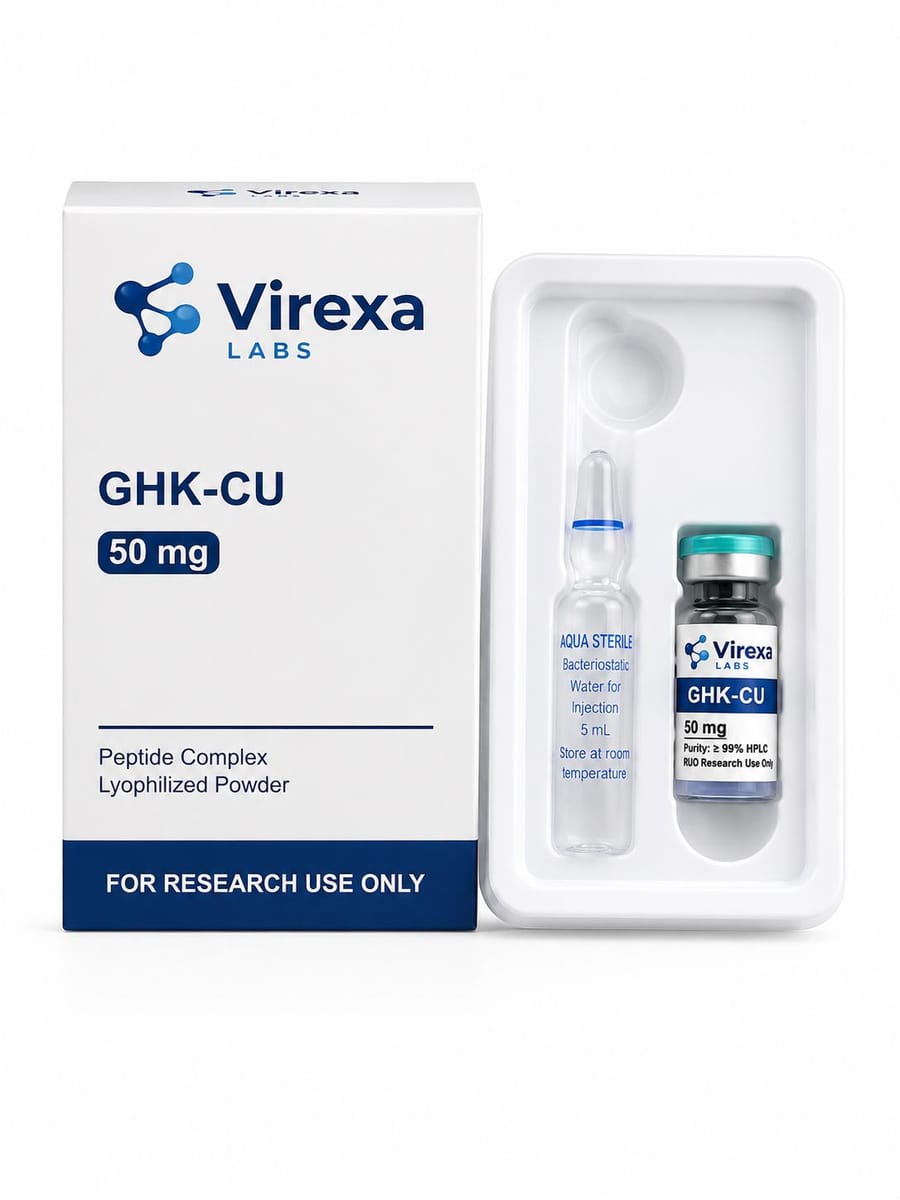
GHK-Cu research peptide. Lyophilized powder, ≥99% purity by HPLC. For research use only.
About GHK-Cu
What is GHK-Cu? The copper peptide explained
GHK-Cu is the copper(II) complex of GHK, the tripeptide glycyl-L-histidyl-L-lysine (Gly-His-Lys). In ingredient nomenclature and in the literature it also appears as copper tripeptide-1, or simply as “copper peptide”. GHK was first isolated from human plasma in 1973 by Loren Pickart, and it soon became clear that this small peptide binds copper(II) ions with strong affinity. The resulting GHK-Cu complex is the form most research focuses on today.
Because GHK occurs naturally in the body, it has become a reference molecule for studying how small peptide–metal complexes take part in tissue maintenance. Plasma levels of GHK are reported to decline with age – one reason the peptide is often included in ageing-related research models.
GHK-Cu in research: what has been studied
Over five decades, GHK-Cu has been examined in a wide range of in vitro and animal models. The main lines of research are:
- Wound-healing models – tissue repair and remodelling in cell-culture and animal studies.
- Collagen and glycosaminoglycan synthesis – extracellular matrix production by fibroblasts in vitro.
- Gene-expression studies – profiling work on how GHK is associated with changes in the activity of large groups of genes.
- Copper binding and transport – GHK as a model ligand for studying how copper(II) is carried and handled in biological systems.
Recognising and handling the copper complex
A useful visual check: GHK-Cu is blue. The colour comes from the bound copper(II) ion and is visible both in the lyophilised powder and in solution after reconstitution. A clearly different colour is worth comparing against the certificate of analysis.
In the lab, GHK-Cu is usually reconstituted with bacteriostatic or sterile water. Add the solvent slowly along the inside wall of the vial and swirl gently rather than shaking. Store the lyophilised peptide at −20 °C, dry and protected from light; 2–8 °C is fine for short periods. Once reconstituted, keep the solution at 2–8 °C, use it within about 4 weeks and avoid repeated freeze–thaw cycles – divide it into aliquots if you need it over a longer period.
Buy GHK-Cu for laboratory research
Looking to buy GHK-Cu? Every batch of our GHK-Cu research peptide is analysed by HPLC (≥99% purity) and its identity is confirmed by mass spectrometry; the certificate of analysis for the current batch is linked on this page. The 50 mg vial is supplied as lyophilised powder. GHK-Cu is also the main component of our Glow 70 and Glow 80 research blends.
GHK-Cu is sold for laboratory research use only – not for human or veterinary use, and not as a cosmetic product.
Frequently asked questions
What is the difference between GHK and GHK-Cu?
GHK is the free tripeptide glycyl-L-histidyl-L-lysine. GHK-Cu is the same peptide bound to a copper(II) ion. Most of the research on wound-healing and extracellular matrix models refers to the copper complex, which is what this product contains.
Is GHK-Cu the same as copper tripeptide-1?
Yes. Copper tripeptide-1 is the ingredient name for GHK-Cu, and “copper peptide” is a common shorthand. All three refer to the copper(II) complex of Gly-His-Lys.
Why is GHK-Cu blue?
The colour comes from the copper(II) ion bound to the peptide. Copper(II) complexes absorb light in the orange-red part of the spectrum and therefore look blue. Both the powder and the reconstituted solution show this colour.
How should GHK-Cu be stored?
Lyophilised: at −20 °C, dry and protected from light (2–8 °C for short-term storage). Reconstituted: at 2–8 °C, used within about 4 weeks and without repeated freezing and thawing.
Can GHK-Cu be used on skin or in humans?
No. This GHK-Cu is sold strictly as a research peptide for laboratory use. It is neither a cosmetic nor a medicine and is not intended for human or veterinary use.