NAD+
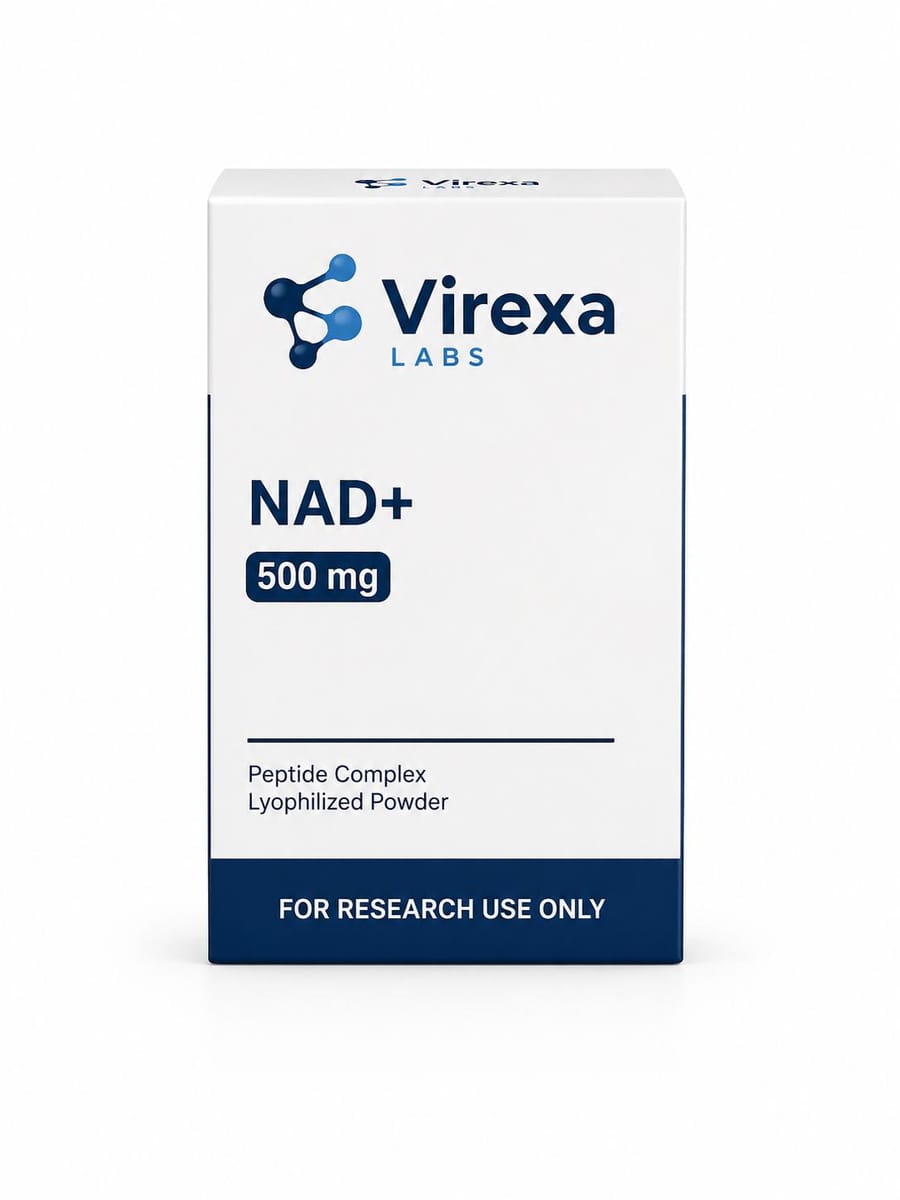
NAD+ research peptide. Lyophilized powder, ≥99% purity by HPLC. For research use only.
About NAD+
What is NAD+ (nicotinamide adenine dinucleotide)?
NAD+ is the oxidised form of nicotinamide adenine dinucleotide, a coenzyme found in every living cell. It is not a peptide but a dinucleotide: two nucleotides – one carrying nicotinamide, the other adenine – joined through their phosphate groups.
Virexa Labs supplies NAD+ as a high-purity research compound for in-vitro laboratory research only – not for human or veterinary use.
Role in redox reactions and cell signalling
In metabolism NAD+ acts as an electron carrier. It accepts electrons in glycolysis, the citric acid cycle and fatty-acid oxidation and is reduced to NADH, which passes those electrons on to the mitochondrial electron transport chain. The NAD+/NADH ratio is therefore a key indicator of a cell's redox state.
NAD+ is also consumed as a substrate by several enzyme families, which links it to cell signalling and DNA repair:
- Sirtuins – NAD+-dependent deacetylases involved in gene regulation and metabolism
- PARPs (poly(ADP-ribose) polymerases) – enzymes involved in DNA repair
- CD38 – one of the main NAD+-consuming enzymes
- Salvage pathway – recycles nicotinamide back into NAD+ via NAMPT and NMN
Research areas
NAD+ is studied in models of cellular energy metabolism, mitochondrial function, DNA repair and ageing. In a number of animal models and tissues, NAD+ levels have been reported to decline with age, which has made NAD+ and its precursors – such as NMN and nicotinamide riboside (NR) – a major topic in ageing research. A related compound in our range is 5-Amino-1MQ, an inhibitor of NNMT, the enzyme that methylates nicotinamide.
Handling, reconstitution and storage
Store the powder at −20 °C, dry and protected from light; 2–8 °C is fine for short periods. NAD+ dissolves readily in water; most labs use bacteriostatic or sterile water, added slowly and swirled gently. In solution NAD+ is less stable than as a dry powder – especially at alkaline pH – so keep solutions at 2–8 °C, use them within about four weeks and avoid freeze–thaw cycles.
Want to buy NAD+ for research? Every batch is tested by HPLC for ≥99% purity and by mass spectrometry for identity, and the COA is shown on this page.
Frequently asked questions
What is NAD+?
NAD+ (nicotinamide adenine dinucleotide) is a coenzyme that carries electrons in redox reactions and serves as a substrate for sirtuins and PARPs.
Is NAD+ a peptide?
No. NAD+ is a dinucleotide coenzyme, not a peptide. We list it with our research products because it is widely used in cellular energy and ageing research.
What is the difference between NAD+ and NADH?
NAD+ is the oxidised form and NADH the reduced form of the same coenzyme. NAD+ accepts electrons and becomes NADH; NADH donates them and becomes NAD+ again.
How do I store NAD+?
As a powder at −20 °C, dry and dark (2–8 °C short term). In solution at 2–8 °C, used within about four weeks, avoiding freeze–thaw cycles.
Is NAD+ suitable for human use?
No. Our NAD+ is sold strictly as a reagent for in-vitro laboratory research and is not intended for human or veterinary use.