TB-500
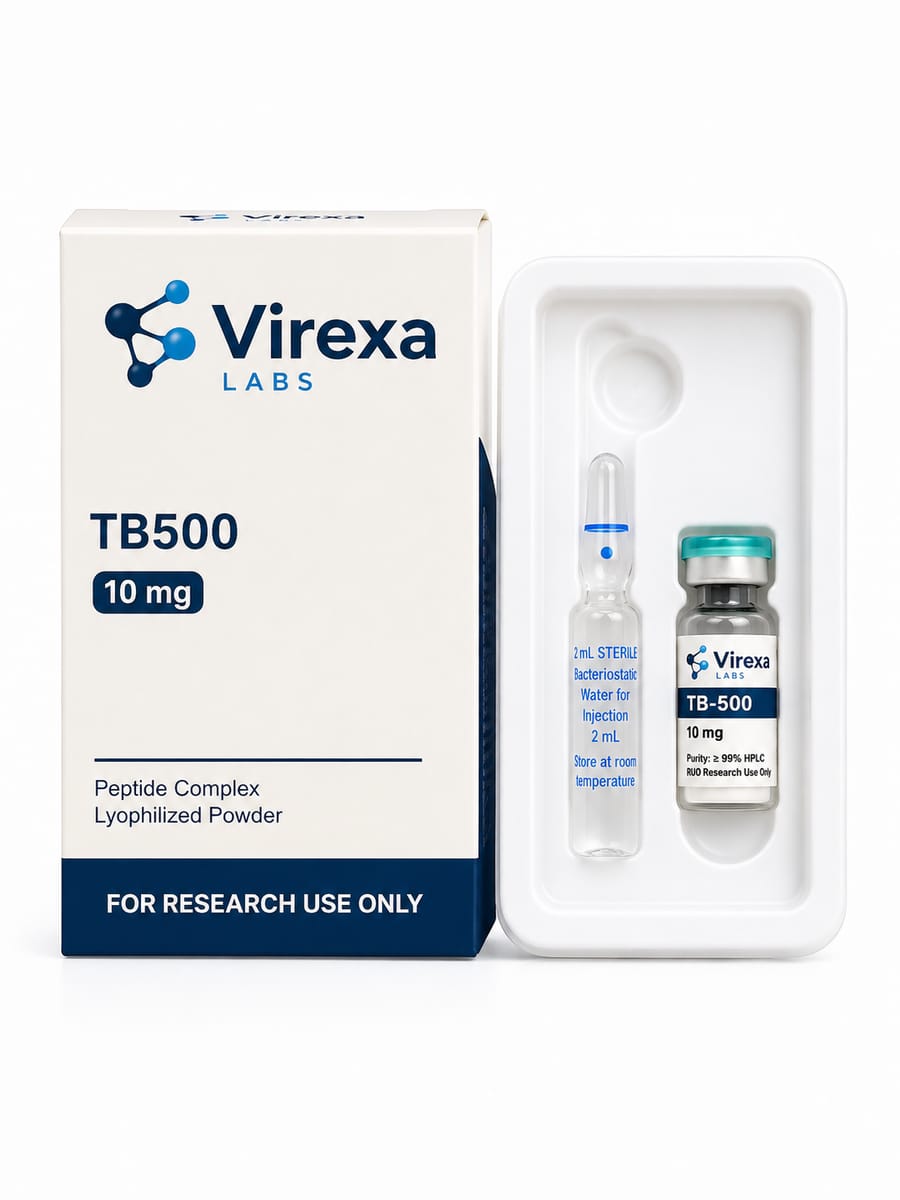
TB-500 research peptide. Lyophilized powder, ≥99% purity by HPLC. For research use only.
About TB-500
What is TB-500?
TB-500 is a synthetic research peptide based on thymosin beta-4 (Tβ4), a naturally occurring 43-amino-acid protein found in almost all human and animal cells. Rather than reproducing the whole protein, TB-500 is modelled on the region of Tβ4 that binds actin – the part most closely linked to its role in cell structure and movement.
Virexa Labs supplies TB-500 as a lyophilised powder for in-vitro laboratory research only. It is not intended for human or veterinary use.
Thymosin beta-4 and actin
Thymosin beta-4 is one of the main actin-sequestering molecules in the cell: it binds monomeric (G-)actin and so helps regulate how actin filaments are built. Because the actin cytoskeleton drives cell shape, migration and division, Tβ4 became a focus of research into how cells move into damaged tissue.
As a Tβ4 fragment, TB-500 lets researchers study this actin-binding activity with a smaller, synthetic molecule. Online, the two names are often used interchangeably; strictly speaking, TB-500 is the synthetic peptide and thymosin beta-4 the full-length natural protein.
Research areas
TB-500 and its parent protein thymosin beta-4 have mainly been studied in cell-culture and animal models, including:
- Cell migration assays, for example with endothelial cells and keratinocytes
- Angiogenesis and the formation of new blood vessels
- Wound-healing models of the skin and other tissues
- Actin dynamics, cytoskeletal organisation and extracellular matrix research
Handling, reconstitution and storage
Keep lyophilised TB-500 at −20 °C, dry and dark; 2–8 °C is acceptable for short-term storage. Allow the vial to reach room temperature before opening.
For reconstitution, bacteriostatic water is usually used. Let it run slowly down the inside wall of the vial, then swirl gently until the solution is clear – never shake. Store the reconstituted peptide at 2–8 °C, use it within about 4 weeks and avoid freeze–thaw cycles.
If you buy TB-500 for research at Virexa Labs, you receive material from batches tested by HPLC (≥99% purity) and confirmed by mass spectrometry, with the COA available on this page.
Frequently asked questions
What is TB-500?
TB-500 is a synthetic research peptide based on the actin-binding region of thymosin beta-4 (Tβ4). It is studied in cell migration, angiogenesis and wound-healing models.
Is TB-500 the same as thymosin beta-4?
Not exactly. Thymosin beta-4 is a natural protein of 43 amino acids. TB-500 is a shorter synthetic peptide modelled on the part of Tβ4 that binds actin. The names are often confused, but they refer to different molecules.
What is the difference between TB-500 and BPC-157?
TB-500 derives from thymosin beta-4 and is mostly studied in relation to actin and cell migration. BPC-157 is a 15-amino-acid fragment of a protein from gastric juice, studied in tissue-repair and angiogenesis models. Their research fields overlap, but their structure and proposed mechanisms differ.
How do I store TB-500?
Lyophilised at −20 °C, dry and protected from light (2–8 °C short term). After reconstitution with bacteriostatic water: at 2–8 °C, used within about 4 weeks, without repeated freezing and thawing.
Is TB-500 suitable for human use?
No. TB-500 from Virexa Labs is intended exclusively for in-vitro laboratory research. It is not for human or veterinary use.